MBBS Abroad Myths vs Facts: What Every Indian Parent Should Really Knowa
A neighbour’s cousin failed the licensing exam. An agent promised a “guaranteed” seat for half the market price. A WhatsApp forward claimed foreign medical degrees are worthless in India. If you are a parent researching MBBS abroad myths right now, you have probably heard all three stories this week alone. Some of it is true. Most of it is not.
This guide separates MBBS abroad myths from the facts that actually matter, with a sharp focus on Georgia and Uzbekistan, the two destinations where thousands of Tamil Nadu families send their children every year. No sales pitch, no scare tactics, just a plain look at what the National Medical Commission actually requires and what parents genuinely need to check before signing an admission form.
Why MBBS Abroad Myths Spread Faster Than the Facts
Parents rarely research a medical degree the way they research a phone or a car. Decisions get made in family WhatsApp groups, at weddings, and over phone calls with a relative who “knows someone.” That is exactly how MBBS abroad myths take root and grow. One bad experience from a decade ago gets repeated as if it happened last month.
Rules change every year. NMC guidelines get updated. New universities gain recognition. Old ones lose it. A myth about MBBS abroad from 2015 might be completely false in 2026, yet it keeps circulating because nobody checks the current facts before repeating it. That gap between old rumours and current reality is where most of the damage happens, and it is exactly what this article is here to fix.
There is also a simpler reason MBBS abroad myths spread so easily. Medicine feels high stakes, so parents want certainty fast. A confident sounding relative or a persuasive agent offers that certainty even when the information is wrong. Facts take longer to explain than rumours do, and that is precisely why rumours usually win the first round of any family conversation about studying medicine overseas.
The Most Common Myths About MBBS Abroad Every Parent Repeats
Before going deeper, here are the myths about MBBS abroad that come up in almost every counselling session we run.
- Myth: A foreign MBBS degree is not valid in India.
- Fact: It is valid once the university is NMC compliant and the graduate clears India’s licensing exam.
- Myth: MBBS abroad always costs more than a private seat in India.
- Fact: Georgia and Uzbekistan often work out cheaper than private colleges back home.
- Myth: Teaching abroad happens only in the local language.
- Fact: Universities we work with in Georgia and Uzbekistan teach the full MBBS course in English.
- Myth: Clinical exposure is weak compared to Indian colleges.
- Fact: Several partner universities run hospital-based clinical training from an early year of the course.
These MBBS abroad misconceptions sound convincing because they contain a grain of old truth. But grains of old truth are not the same as current facts, and parents deserve better than outdated gossip when their child’s future is on the line.
MBBS Abroad Myths vs Facts: Is the Degree Actually Valid in India?
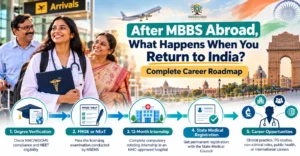
This is the question that keeps parents awake at night, so let’s answer it directly. An MBBS degree from abroad can be valid in India if the university and course meet NMC requirements and the graduate fulfills India’s licensing requirements, such as FMGE or NExT, as applicable. That single sentence resolves most MBBS abroad myths on its own.
Here is what actually decides whether a degree counts.
- Recognition: Choose an NMC compliant, properly recognized medical university. This is non negotiable.
- Cost: Studying MBBS abroad can be more affordable than private medical colleges in India, depending on the country and university chosen.
- Education quality: Some overseas universities offer modern infrastructure, functional laboratories, and hospital based clinical training from early years.
- Licensing: Passing the required Indian licensing exam is essential, and success depends partly on how relevant and rigorous the medical curriculum actually was.
In short, the real MBBS abroad truth is simple. A foreign degree is not automatically invalid or low quality, and it is not automatically a golden ticket either. The outcome depends on the choices a family makes before enrolment, not on some blanket rule about foreign degrees.
Common Myths About Studying MBBS Abroad and the Real Cost Difference
Money is where most families get the numbers wrong. Cost comparisons rarely account for hostel fees, food, flights, and hidden charges on either side, so let’s put real figures next to each other.
| Expense Head | Private MBBS in India | MBBS in Georgia | MBBS in Uzbekistan |
|---|---|---|---|
| Total course fee (approx) | Rs 60 to 100 lakh | Rs 22 to 32 lakh | Rs 18 to 28 lakh |
| Donation or capitation | Common, often unofficial | Not applicable | Not applicable |
| Hostel and food | Rs 1 to 2 lakh per year | Included or low cost | Included or low cost |
| Medium of instruction | English/Regional | English | English |
| NMC recognition needed | Not applicable | Yes, verify before joining | Yes, verify before joining |
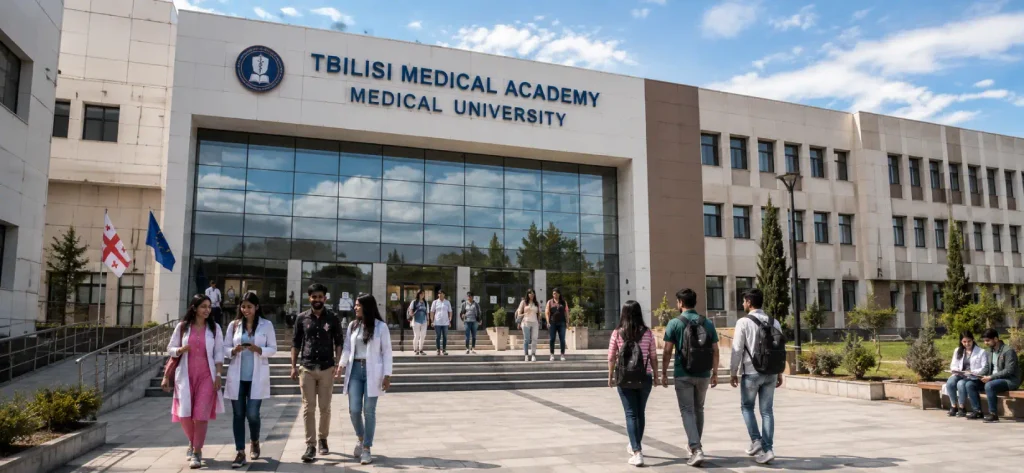
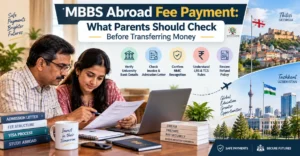
Numbers shift a little every intake, so always confirm current fees directly with the university before signing anything. But the pattern above holds steady year after year, and it is why so many MBBS abroad misconceptions about cost simply do not survive contact with real fee structures. For a fuller breakdown of what actually gets billed and when, our guide on 10 questions every parent should ask before paying MBBS abroad fees walks through it step by step.
MBBS Abroad Facts About Education Quality in Georgia and Uzbekistan
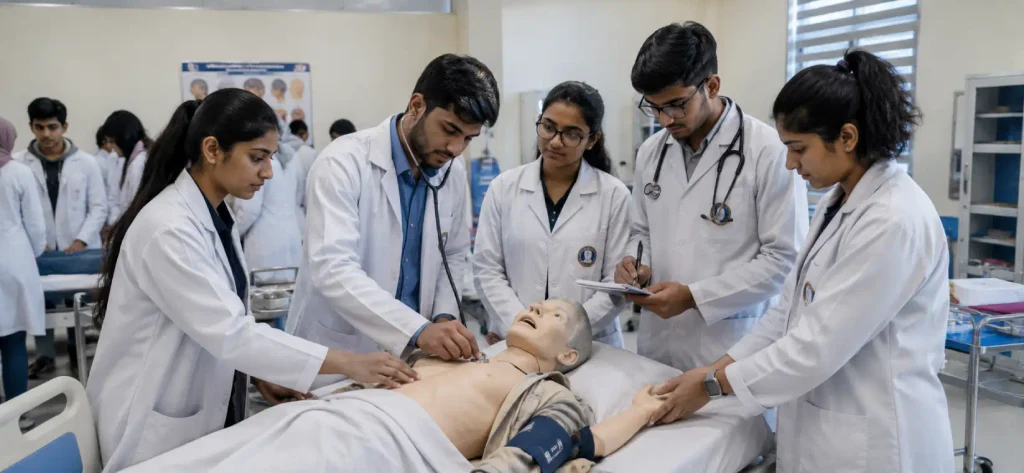
Quality is the second biggest worry after validity, and it deserves an honest answer rather than a sales pitch. Some overseas universities do offer modern infrastructure, working laboratories, and hospital based clinical training. Others do not. The country is not the deciding factor. The specific university is.
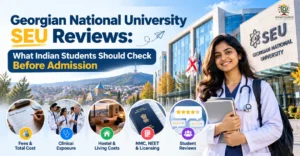
Take MBBS in Georgia as an example. Institutions like Georgian National University SEU run a six year English medium course with NMC and WHO recognition, alongside clinical rotations through affiliated hospitals from the early years of the programme. Move to MBBS in Uzbekistan and universities such as Tashkent State Medical University and Samarkand State Medical University follow a similar pattern: structured academics, English instruction, and strong clinical exposure built into the curriculum rather than bolted on at the end.
So the MBBS abroad facts on quality are not a blanket yes or no. They depend entirely on due diligence before admission, not on assumptions made after watching one viral video about a “fake” university somewhere else in the world.
MBBS Abroad Truth About Licensing: FMGE, NExT and NMC Rules Explained
Even a strong degree means little without the right licensing exam clearance. Passing the required Indian licensing exam is essential, and here is why that single line carries so much weight. India currently runs its foreign medical graduate licensing process through FMGE, with NExT being phased in as the newer standard. A student’s success in either exam depends heavily on how closely their overseas curriculum matched Indian clinical expectations during those six years.
This is exactly where MBBS abroad myths do the most damage. Parents hear “our students pass the licensing exam” from an agent and stop asking follow up questions. Smart families ask for actual batch wise pass percentages, not vague promises. Our detailed comparison on FMGE vs NExT exam differences breaks down exactly what each exam expects, and our NMC guidelines for MBBS abroad guide covers the regulatory side in full.
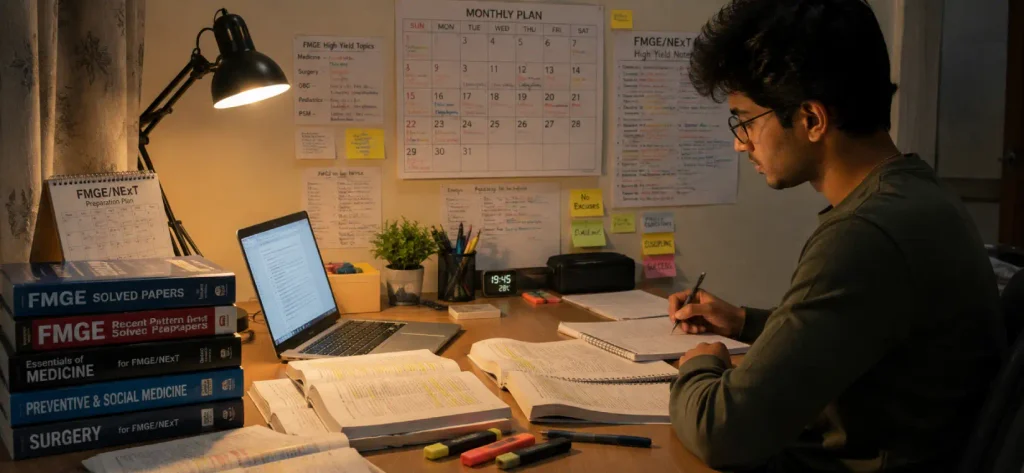
Three questions cut through most licensing confusion fast:
- What was last year’s FMGE or NExT pass rate for this specific university’s graduates?
- Does the curriculum include enough hands on clinical hours before the internship year?
- Is coaching support for the licensing exam built into the programme or left entirely to the student?
Myths About MBBS Abroad in Georgia That Parents Should Stop Believing
Georgia specific rumours travel fast in Tamil Nadu counselling circles, and most of them fall apart under a five minute fact check.
- Myth: Georgia is unsafe for Indian students.
- Fact: Tbilisi and Batumi host large, well established international student communities with active support networks.
- Myth: Indian food is impossible to find.
- Fact: Dedicated Indian messes serve regular meals to students throughout the academic year.
- Myth: The degree only works for practising within Georgia.
- Fact: NMC recognized universities allow graduates to appear for India’s licensing exam and practise back home.
- Myth: Winters make studying unbearable.
- Fact: Students adjust within the first semester, and campuses run heated indoor facilities year round.
Once you strip away the exaggeration, Georgia becomes a far more practical option than the rumour mill suggests, provided the university itself is properly vetted first.
MBBS Abroad Misconceptions About Uzbekistan Every Family Gets Wrong
Uzbekistan carries its own set of tired myths about MBBS abroad, usually built on outdated information from before the country’s medical universities modernised their programmes.
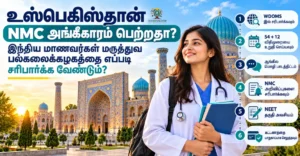
- Assuming every Uzbekistan university is unranked or unrecognised, when several hold clear NMC and WHO recognition today.
- Believing classes run in Uzbek or Russian only, when English medium batches are standard at partner universities.
- Thinking hostel life is unsafe, when campuses like those in Tashkent, Samarkand, and Bukhara maintain gated, supervised student housing.
- Assuming return flights and visits home are rare, when direct and connecting routes from South India run through the year.
Families who take the time to verify university specific details, rather than relying on general country level gossip, usually walk away pleasantly surprised. For a closer look at daily life once classes begin, our guide on student life, food, and hostels in Georgia and Uzbekistan covers the ground level reality in detail.
How Parents Can Separate MBBS Abroad Myths for Indian Students From Facts
Every family researching MBBS abroad myths for Indian students needs a simple filter before believing anything they read online or hear at a family function. Verification beats assumption every single time.
Run through this checklist before signing any admission form.
- Confirm the university appears on the current NMC eligibility list National Medical Commision rather than trusting a brochure claim.
- Cross check the institution against the WHO World Directory of Medical Schools World Directory of Medical Schools for independent confirmation.
- Ask for the exact language of instruction in writing, not a verbal assurance.
- Request a full fee breakdown covering tuition, hostel, food, and any hidden charges.
- Speak directly to current students or recent graduates, not just the admission office.
Careful families who work through checklists like this rarely fall for MBBS abroad misconceptions later, because they have already replaced assumption with actual verification. It takes an evening of phone calls and website checks. It saves years of regret if something is wrong. That trade is worth making every single time, no matter how trustworthy an agent or a brochure sounds on the first call.
MBBS Abroad Myths for Indian Students About Career and Job Prospects
A fresh worry has replaced the old “is it valid” question in most counselling calls this year. Parents now ask what happens after graduation, and a fresh batch of MBBS abroad myths has grown around that gap.
Some relatives insist a foreign trained doctor cannot get a government hospital posting in India. Others claim private hospitals quietly reject overseas graduates during interviews. Neither claim holds up once the licensing exam is cleared. A graduate who passes FMGE or NExT gets registered with the State Medical Council exactly like any Indian trained doctor, and that registration opens the same government, private, and postgraduate entrance pathways.
What actually affects a graduate’s career is not the country where they studied. It is how well their clinical training prepared them for Indian hospital settings, and how seriously they treated licensing exam preparation during the final years abroad. Students who train at hospital affiliated universities in Georgia and Uzbekistan, and who start FMGE or NExT preparation early instead of waiting until graduation, tend to walk into interviews with far more confidence than the rumour mill would suggest.
MBBS Abroad Myths and Facts at a Glance
Here is the fastest possible summary of everything covered so far.
| Common Myth | Verified Fact |
|---|---|
| Foreign MBBS degrees are invalid in India | Valid once the university is NMC compliant and licensing exams are cleared |
| MBBS abroad always costs more | Georgia and Uzbekistan are often cheaper than private Indian colleges |
| Teaching happens only in the local language | English medium instruction is standard at partner universities |
| Clinical training is weak abroad | Hospital based clinical rotations start in early years at many universities |
| Any agent’s promise can be trusted blindly | Only NMC and WHO verification confirms real recognition |
This table alone answers most of the MBBS abroad myths vs facts questions that arrive in our inbox every single week.
The Real MBBS Abroad Truth Parents Need Before Making a Decision
Strip away the noise and one plain fact remains. MBBS abroad is neither a trap nor a shortcut. It is a serious academic path that rewards families who check details and punishes those who skip that step. Georgia and Uzbekistan both offer genuine, NMC recognized routes into medicine for Indian students, but only when the specific university, course structure, and licensing pathway have been verified properly.
Annamalayar Educational Trust has spent more than twenty years helping Tamil Nadu families do exactly that verification work before a single rupee changes hands. If your family is still weighing MBBS abroad myths against real facts, start with a direct conversation rather than another forwarded message. Visit our homepage [INSERT INTERNAL LINK HERE: https://annamalayareducation.com/] to see how our counselling process works, or go straight to our contact page [INSERT INTERNAL LINK HERE: https://annamalayareducation.com/contact-us/] to book a free session with a consultant who has walked hundreds of families through this exact decision.
Frequently Asked Questions About MBBS Abroad Myths and Facts
Yes, provided the university is NMC compliant and the graduate clears the required licensing exam such as FMGE or NExT.
Not usually. Total costs in Georgia and Uzbekistan, including hostel and food, often stay well below private MBBS fees in India.
Yes, the partner universities we work with run the entire six year MBBS programme in English medium.
That every foreign university is automatically fake or unrecognised. Recognition depends on the specific institution, not the country as a whole.
Check the university against current NMC and WHO listings, request a written fee breakdown, and speak to current students before paying anything.