MBBS Abroad Clinical Exposure: What Parents Should Check Before Choosing a University
Every August a fresh batch of Indian parents signs an admission form for MBBS abroad clinical exposure without ever seeing the hospital ward printed in the brochure. The photo looks impressive. The building looks new. But nobody in the family asks the one question that decides whether their child becomes a confident doctor or a nervous graduate holding a paper degree. That question is simple. How much real patient contact will this university actually give my child?
MBBS abroad clinical exposure is not a marketing line. It is the difference between a student who has held a stethoscope on a real patient by third year and one who has only watched a slideshow for six years. This guide breaks down exactly what parents should check before they pay a single rupee. The focus stays on Georgia and Uzbekistan, the two countries where most Tamil Nadu families currently send their children for medicine.
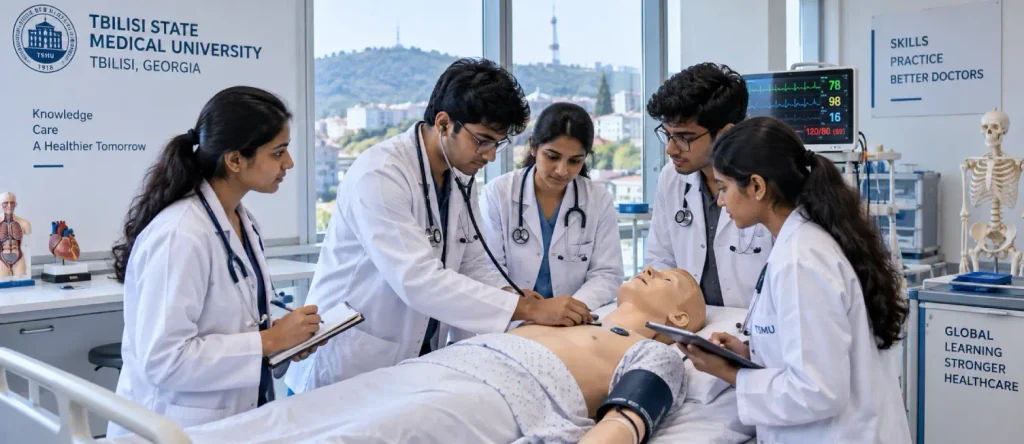
Why MBBS Abroad Clinical Exposure Decides Your Child’s Future as a Doctor
A medical degree is not just about passing exams. It is about touching a real patient’s wrist and feeling a pulse for the first time under supervision. Clinical exposure for MBBS abroad students builds this confidence early. Without it, a student can memorise every textbook chapter and still freeze during an actual diagnosis. That is why doctors trained with strong hospital exposure clear licensing exams faster and adjust to real practice sooner.
Weak clinical exposure creates a silent gap instead. Students graduate on paper but struggle the moment they enter an Indian hospital for internship. So this one factor, more than campus photos or city rankings, should guide a parent’s final decision. Georgia and Uzbekistan both offer MBBS programs at a lower cost than private colleges in India. But cost alone should never replace the quality of MBBS abroad clinical training a student actually receives inside the wards.
Teaching Hospital Access: The Real Test of MBBS Abroad Clinical Training
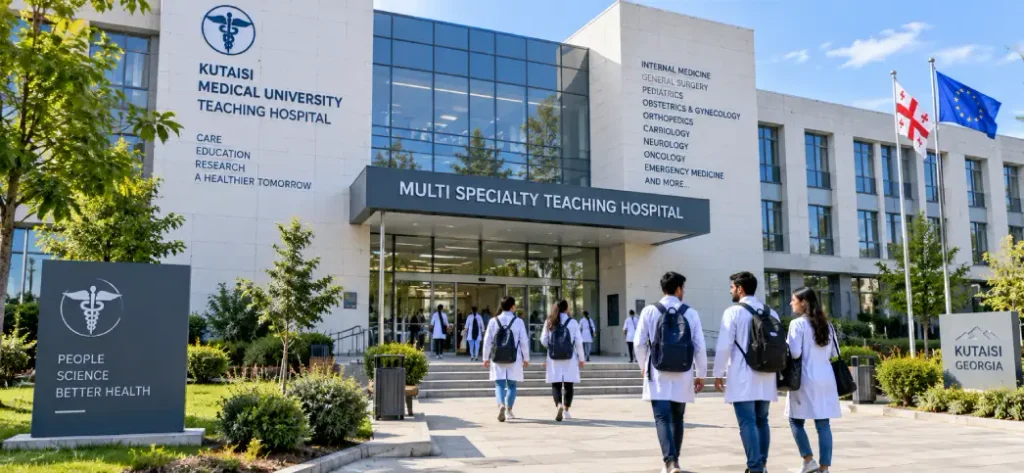
A father from Karur once called our office in a panic. His son had joined a university in Uzbekistan two years earlier. The brochure showed a shining multi specialty hospital. Reality looked different. His son visited that hospital only twice a semester. The rest of his training happened through tie ups with smaller clinics carrying far less patient traffic. This is a common trap inside MBBS abroad hospital training. Some universities own their teaching hospital outright. Others simply hold agreements with outside hospitals that may or may not offer real access. Parents need to know which model a university follows before admission, not after.
Ask the university these questions directly and get the answers in writing:
- Does the university own its teaching hospital or rent access from another hospital?
- How many beds does the teaching hospital actually have?
- Is the hospital walking distance from campus or a long commute away?
- Can students visit the hospital and see the wards before taking admission?
- Is the hospital agreement long term or renewed year by year?
Patient Flow and Bed Capacity in MBBS Abroad Hospital Training

A big building means nothing if patients are not walking through its doors. Patient flow is the real fuel behind MBBS abroad hospital training. A hospital with strong OPD numbers and full bed occupancy gives students constant exposure to real cases. A quiet hospital with empty beds gives students nothing to practise on, no matter how modern the equipment looks. Parents should ask for average daily OPD footfall and bed occupancy rate directly. If the university hesitates to share these numbers clearly, that hesitation is itself an answer.
| What to Check | Why It Matters for Clinical Exposure |
|---|---|
| Daily OPD footfall | Shows how many real patients students actually see each day |
| Bed occupancy rate | Low occupancy means fewer bedside learning opportunities |
| Number of departments | More departments mean wider clinical exposure for MBBS abroad students |
| ICU and emergency access | Builds practical skill under real pressure and time limits |
| Students per hospital ratio | Too many students per hospital reduces individual hands-on time |
Hands-on Clinical Training Abroad vs Just Watching Doctors Work
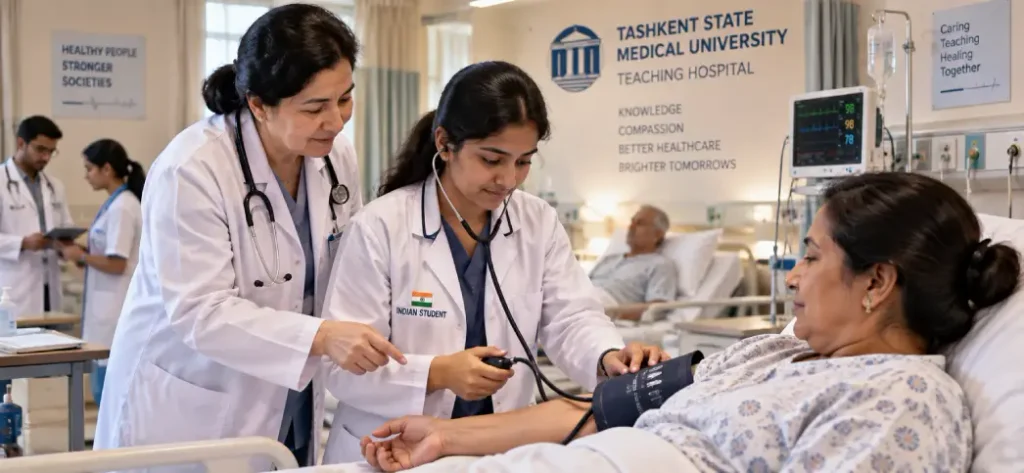
There is a big difference between standing behind a doctor and actually examining a patient yourself. Hands-on clinical training abroad means students take patient history, use basic instruments and practise simple procedures under supervision. Passive observation means students simply watch and take notes from a distance. Ask specifically which one the university provides and from which academic year it begins.
- Can students take patient history themselves by second or third year?
- Are students allowed to use a stethoscope, BP apparatus and basic instruments on real patients?
- Do students assist in minor procedures under supervision?
- Is there a skills lab before real ward exposure begins?
- Are senior students given more responsibility as they progress?
When Do Clinical Rotations Begin? Timing in MBBS Abroad Practical Training
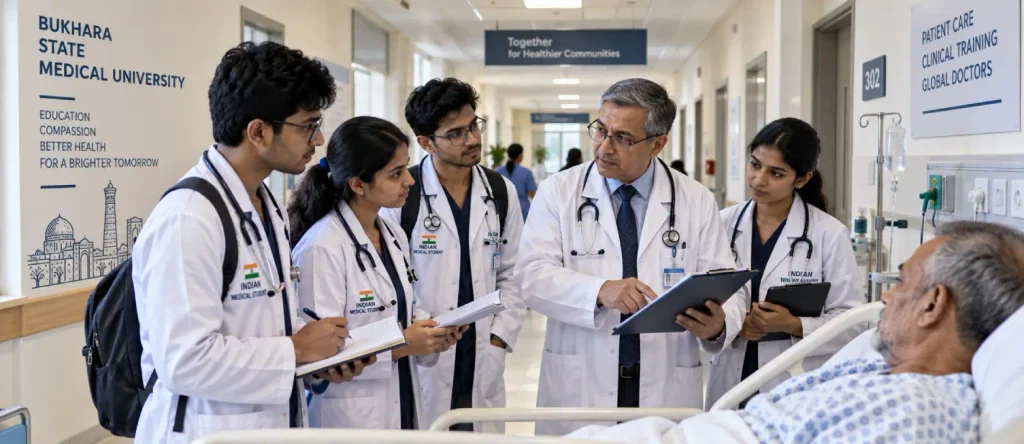
Some universities start clinical rotations only in the final two years. Others introduce students to hospital wards from second year itself. Earlier exposure generally builds stronger practical confidence. Parents should ask exactly when rotations begin, how many hours per week they run and which departments come first. A program that delays hospital exposure until the last year leaves very little time for real practice before graduation.
Duration matters just as much as the starting point. A rotation lasting two weeks per department barely scratches the surface. A rotation running six to eight weeks per major department lets students actually follow patient cases from admission to discharge. This detail rarely appears in glossy brochures. It only comes out when parents ask the university directly and insist on a written rotation schedule.
Language and Patient Communication in MBBS Abroad Teaching Hospital
Clinical exposure only works if the student can actually talk to the patient. In Georgia many teaching hospitals serve local Georgian speaking patients. In Uzbekistan the same holds true with Uzbek and Russian speaking patients. If lectures run in English but ward rounds happen in the local language, a student can end up standing silently beside the bed instead of learning anything useful. Ask whether the university provides basic local language training in the first year and whether senior doctors translate during rounds for international students.
- Are lectures conducted fully in English or partly in the local language?
- Does the university teach basic Georgian or Uzbek for patient interaction?
- Do supervising doctors help translate during ward rounds?
- Can international students communicate directly with local patients by final year?
NMC Recognition and WDOMS Listing for MBBS Abroad Practical Training
No amount of clinical exposure matters if the degree itself is not recognised back home. Every parent must confirm that the university appears on the World Directory of Medical Schools, known as WDOMS. This listing stays mandatory for Indian students who want to sit the licensing exam after returning to India. Along with WDOMS status, check that the program duration, curriculum structure and internship rules match current NMC requirements. Rules have shifted more than once in recent years, so an older brochure may not reflect today’s actual regulations.
Our detailed breakdown of NMC Guidelines for MBBS Abroad 2026 explains this in full, including the recent changes that most parents miss.
FMGE and NExT Track Record: Proof of Real Medical Internship Abroad for Indian Students
A university’s clinical exposure quality eventually shows up in one place, the licensing exam result. Ask the university or your consultant for the FMGE or NExT pass percentage of previous batches wherever reliable data exists. A university that consistently produces students who clear this exam on the first attempt is very likely giving real hands-on training, not just lecture based education. Stay cautious of vague answers like almost everyone passes with no actual number behind them.
If you are unclear on how these two exams differ, our guide on FMGE vs NExT Exam differences explains it in plain language.
Total Cost of MBBS Abroad Clinical Exposure Beyond Tuition Fees
Parents often compare universities only on tuition fees. That is a mistake. Total cost includes hostel, food, travel, insurance and daily living expenses across the entire course, not just one year. Georgia and Uzbekistan both offer a lower overall cost compared to private colleges in India, but the gap between a cheap looking brochure and the real yearly spend can turn out large.
| Expense Category | Georgia (Approx per year) | Uzbekistan (Approx per year) |
|---|---|---|
| Tuition Fee | Moderate to high, varies by university | Generally lower than Georgia |
| Hostel and Food | approx. ₹2.5 Lakh to ₹5 Lakh INR | approx. ₹1,00,000 to ₹2,10,000 INR |
| Travel and Visa | Varies by season and route | Varies by season and route |
| Health Insurance | Mandatory, check inclusions closely | Mandatory, check inclusions closely |
| Books and Local Transport | Small recurring cost | Small recurring cost |
These figures are approximate. Always ask for a written cost breakdown. Our article on the hidden cost of MBBS abroad lists the expenses families forget to budget for most often.
Student Safety and Support During Clinical Experience for Indian Medical Students Abroad
Clinical exposure often means late hospital shifts, night duty and travel between campus and hospital. So safety is not a side topic, it forms part of the clinical training itself. Check hostel security, transport arrangements for night shifts and whether the university keeps a dedicated support team for Indian students.
- Is hostel accommodation close to the teaching hospital?
- Does the university arrange transport for night duty rotations?
- Is Indian food available near the campus?
- Is an emergency medical contact available for students round the clock?
- Does the consultancy provide post arrival support after admission?
Our detailed guide on hostel, food and student life in Georgia and Uzbekistan covers this side of MBBS abroad clinical exposure in far more depth.
Georgia vs Uzbekistan Quick Comparison for MBBS Abroad Clinical Exposure
| Factor | Georgia | Uzbekistan |
|---|---|---|
| Teaching Hospital Model | Mix of university owned and affiliated hospitals | Mostly affiliated with government hospitals |
| Clinical Rotation Start | Generally from third year | Varies, some start earlier |
| Language on Wards | Georgian, English support varies | Uzbek and Russian, English support varies |
| Living Cost | Slightly higher | Generally more affordable |
| Popular Study Cities | Tbilisi, Kutaisi | Tashkent, Samarkand, Bukhara, Andijan |
Neither country wins automatically. The right choice depends on a specific university’s clinical exposure, not the country name printed on the brochure. This is exactly why MBBS Abroad counselling should go university by university instead of comparing whole countries in broad strokes.
Quick Checklist Before You Sign: MBBS Abroad Practical Training Checklist
- Confirm the teaching hospital ownership in writing
- Ask for OPD footfall and bed numbers directly
- Check exactly when clinical rotations start
- Verify hands-on training, not only observation
- Confirm WDOMS listing and NMC compliance
- Ask for FMGE or NExT pass data from past batches
- Get a full cost breakdown across all six years
- Check hostel safety and food options near campus
- Speak to a current student before you sign anything
Ready to check a specific university’s clinical exposure before you pay fees?
Talk to our counsellors through Annamalayar Educational Trust or reach out directly on our Contact Us page for a free, honest evaluation of Georgia and Uzbekistan universities.
Summary: What Parents Should Check Before Choosing an MBBS University Abroad
Parents should evaluate clinical exposure, hospital infrastructure, regulatory recognition and total cost before selecting an MBBS university abroad. Here are the key points in one place.
- Teaching Hospital: Check whether the university has its own multi specialty teaching hospital or depends on third party hospitals.
- Patient Flow and Bed Capacity: Verify OPD numbers, bed occupancy and sufficient patient volume for practical exposure.
- Hands-on Training: Confirm that students get real bedside experience rather than only observing doctors.
- Clinical Rotations: Check when rotations begin, their duration and the amount of practical hospital training provided.
- Language: Determine whether students can communicate with patients in English or need to learn the local language.
- NMC and Recognition: Ensure the program meets applicable NMC requirements and verify the university’s WDOMS listing.
- Licensing Outcomes: Review historical FMGE or NExT related performance wherever reliable data is available.
- Total Expenses: Consider tuition, hostel, food, travel, insurance and other costs across the entire course.
- Student Safety and Support: Assess campus safety, hostel conditions, food options and emergency medical support.
In short: Don’t choose an MBBS university based only on fees or location. Verify the quality of the teaching hospital, patient exposure, hands-on clinical training, regulatory compliance, licensing outcomes and overall cost before admission.
Frequently Asked Questions on MBBS Abroad Clinical Exposure
It means the real, supervised contact a student gets with actual patients during the course, not just lectures and textbook study. This includes ward rounds, taking patient history, using basic instruments and following real cases inside a teaching hospital.
It depends entirely on the university, not the country. Some universities give students real bedside practice from second year. Others keep students in an observer role for far longer. Parents must ask this question university by university rather than assuming a whole country follows one pattern.
Most programs begin structured clinical rotations somewhere between the second and fourth year. Earlier rotations generally lead to stronger practical confidence by the time internship begins. Always request the exact rotation schedule in writing before admission.
Students with stronger, earlier clinical exposure tend to handle the practical and case based sections of these licensing exams with more confidence. A university with a track record of consistent passes is usually a sign of solid hospital training behind the scenes.
Ask for the teaching hospital’s name, ownership status, bed count and OPD numbers in writing. Request the rotation schedule and speak with a current student if possible. A university confident in its clinical exposure will share these details without hesitation.